Welcome to our virtual classroom.
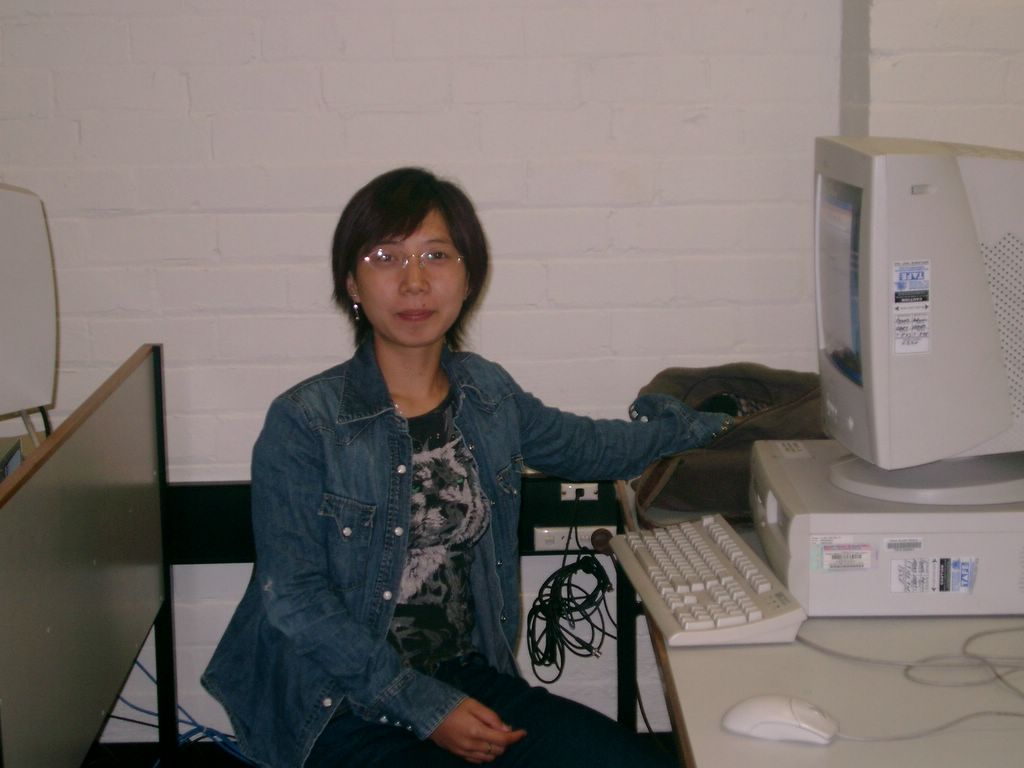
Hello, my name is Li Chen. I’m from China. I have been in Australia for 2 years and I’m currently doing an ESOL Level 4 course at TAFE. I studied English in China, but it is really different to doing it here. I’ll tell you more about it later.
I have met some very nice people in my ESOL class. We sometimes go out together on Fridays (I’ve got Fridays off!). One of my best classmates is Ana. Here she is!

Hi there. My name’s Ana. I’m Li’s classmate. I’m from Argentina. I met Li at TAFE. She has been here a lot longer than I have. I only came two months ago. I studied English at university, so they put me in the last ESOL level, but I don’t think I understand as much as Li does.
In this class we are learning many things, reading, writing, listening and speaking. But we are also learning many other things, like Australian Systems and Culture, pronunciation, and many other things.
We are now learning a module called Approaches to Learning. We were given this quote as an introduction to Approaches to Learning:
“The most important learning of all- for both children and adults- is learning how to learn, the skills of self directed enquiry”
Knowles, M (1978) The Modern Practice of Adult Education” From Pedagogy to Andragogy. Chapter 4. ‘What is Andragogy?’. Prentice Hall, Inc, Englewood Cliffs. NJ.
This module is based on the TAFE curriculum for Certificate II in ESOL (English for Speakers of Other Languages). In it we are learning about how to study. I never thought that studying was different in different countries, but it can be.
Our teacher told us that learning is in part a personal experience. There are several ways in which a person learns: active learning, passive or receptive learning, reflective learning and critical learning. We can also do a lot of the learning individually, but we have to learn how to learn as part of a team. We also learn in a very specific environment (TAFE,so we have to become familiar with it to take advantage of everything it offers.
We are going to cover all these different ways of learning in three units or topics:
Topic 1: My Study Room (Personal Learning). (6 hours recommended) (it includes Critical Learning)
Topic 2: TAFE: classroom, library, ASC, counsellor’s unit (Learning in Context) (4 hours recommended)
Topic 3: Group work (Collaborative Learning) (4 hours recommended)
Topic 4: Smart learning (Critical thinking) ( 4 hours recommended)
This is the Assessment Grid (making the hidden curriculum explicit:LOS with assess tasks)
Learning Activity 1
Click on Skills Assessment for Computer Based Learning. Have a play around. You will learn many things about computers.
Learning Activity 2
Do this exercise on computer language: Weblang
Assessment task: After doing Activities 1 & 2, you can open this survey on computer knowledge: User profile doc. Copy it (save as) and fill it in. Then upload it or send it as an attachment. It will help your teachers know how much you know about computers. Then they will be able to help you better.
posted by rosa ochoa @ 11:55 PM


0 Comments:
Post a Comment
<< Home